Free shipping on orders over $100 ✦ Research-Grade Purity ✦ Rigorously Tested ✦ Science-Backed Formulas

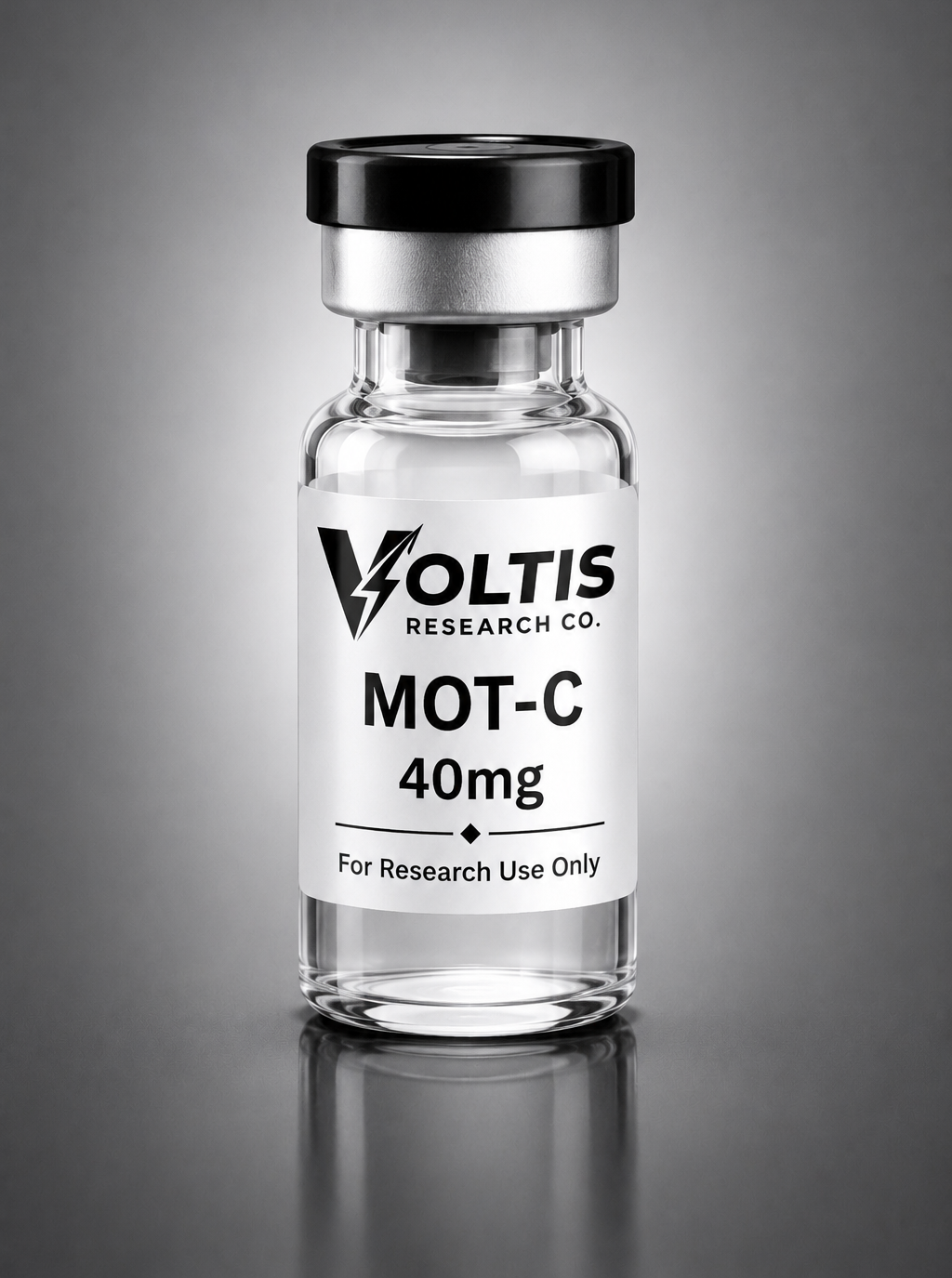
MOTS-C 40mg

MOTS-c

Mitochondrial-Derived Peptide • Metabolic & Cellular Energy Research

For Research Use Only

Overview

MOTS-c (Mitochondrial Open Reading Frame of the 12S rRNA Type-c) is a naturally occurring 16-amino-acid mitochondrial-derived peptide (MDP) involved in cellular communication and metabolic regulation.

Unlike conventional peptides encoded primarily by nuclear DNA, MOTS-c originates from a small open-reading frame within mitochondrial DNA. Researchers study it as part of an emerging communication system through which mitochondria influence cellular and whole-body responses to metabolic stress.

MOTS-c research has focused particularly on skeletal muscle, glucose metabolism, insulin signaling, AMPK activation, mitochondrial-to-nuclear communication, exercise physiology, and metabolic homeostasis. Much of the experimental intervention evidence remains preclinical.


Research Areas

MOTS-c has been investigated in research involving:

  • Mitochondrial function
  • Cellular energy metabolism
  • Metabolic homeostasis
  • AMPK signaling
  • Glucose utilization
  • Insulin sensitivity
  • Skeletal-muscle metabolism
  • Lipid and fatty-acid metabolism
  • Exercise physiology
  • Cellular stress responses
  • Mitochondrial-to-nuclear signaling
  • Aging biology

Skeletal muscle appears to be an especially important tissue in MOTS-c research.


Mechanism Being Studied

One of the primary pathways associated with MOTS-c is AMP-activated protein kinase (AMPK), a major cellular energy sensor.

Research suggests MOTS-c can influence the folate cycle and de novo purine synthesis, leading to accumulation of AICAR and subsequent activation of AMPK.

Researchers are investigating downstream effects involving:

MOTS-c → Metabolic Stress Signaling → AICAR/AMPK → Cellular Energy Adaptation

These pathways may influence:

  • Glucose uptake
  • Fatty-acid utilization
  • Cellular energy balance
  • Insulin signaling
  • NAD⁺-associated metabolism
  • Skeletal-muscle metabolism
  • Adaptive responses to metabolic stress

MOTS-c has also been observed to move into the cell nucleus during metabolic stress, where researchers believe it participates in regulating nuclear gene expression. This makes MOTS-c particularly interesting as a potential messenger between the mitochondrial and nuclear genomes.


Mitochondrial-to-Nuclear Communication

One of the most fascinating areas of MOTS-c research involves retrograde signaling.

Traditionally, mitochondria were viewed primarily as cellular energy-producing organelles. Research into mitochondrial-derived peptides suggests mitochondria can also generate signaling molecules capable of communicating information about cellular energy status and stress.

MOTS-c therefore provides researchers with a tool for investigating:

Mitochondria → MOTS-c → Nucleus → Adaptive Gene Expression

This emerging field may help researchers better understand how cells coordinate metabolism, stress adaptation, exercise responses, and aging.


Why Researchers Study MOTS-c

MOTS-c sits at the intersection of several major research areas:

  • Mitochondrial biology
  • Metabolic regulation
  • Exercise physiology
  • Skeletal-muscle function
  • Cellular stress adaptation
  • Aging biology

In mouse studies, MOTS-c administration has been associated with changes in insulin sensitivity, glucose metabolism, and resistance to diet- and age-associated metabolic dysfunction. These findings remain predominantly preclinical and should not be interpreted as established therapeutic effects in humans.


Product Features

✔ Premium Research Grade
✔ High-Purity MOTS-c
✔ Mitochondrial-Derived Research Peptide
✔ Third-Party Tested (COA Available)
✔ Identity & Purity Verification
✔ Secure Professional Packaging
✔ Laboratory Research Only


Common Research Applications

Researchers may investigate MOTS-c in studies involving:

  • Mitochondrial signaling
  • Cellular bioenergetics
  • AMPK pathway research
  • Glucose metabolism
  • Skeletal-muscle physiology
  • Metabolic stress
  • Insulin-signaling pathways
  • Exercise adaptation
  • Lipid metabolism
  • Mitochondrial-to-nuclear communication
  • Aging and cellular resilience

Storage

Store according to the product’s batch-specific stability documentation.

Protect lyophilized material from excessive heat, moisture, and direct sunlight.

Following preparation for laboratory experiments, use validated laboratory storage procedures and minimize unnecessary temperature cycling or repeated freeze-thaw exposure.


Disclaimer

For Research Use Only.

MOTS-c is an investigational research peptide. Although endogenous MOTS-c has been studied in humans observationally, much of the evidence supporting experimentally administered MOTS-c comes from cellular and animal research. Its therapeutic safety and effectiveness have not been established for routine clinical use.

This product is intended exclusively for laboratory research and analytical purposes.

Not intended for human or veterinary use.


Why Choose Voltis Research Co.

At Voltis Research Co., quality begins with verification. Researchers deserve confidence that the compound identified on every vial accurately represents the material being investigated.

Qualifying batches undergo independent third-party analytical testing, with batch-specific Certificates of Analysis available to document identity and purity.

The Voltis Commitment

⚡ Research-Grade Quality
⚡ Independent Third-Party Testing
⚡ Batch-Specific Certificate of Analysis (COA)
⚡ High-Purity Research Peptides
⚡ Rigorous Quality Control
⚡ Secure Professional Packaging
⚡ Transparency, Consistency & Reliability

Powering Discovery Through Quality Research.

MOTS-C (40 mg Vial) Dosage Protocol

$80.00

Category:
Voltis

I CERTIFY I AM AT LEAST 21 YEARS OF AGE

Sorry, your age does not permit you to enter at this time.

IMPORTANT DISCLAIMER

Voltis supplies peptides and research compounds intended for laboratory and research purposes only.
These products are not approved for human consumption and have not been evaluated by the FDA.
By entering this website, you acknowledge that you are at least 21 years of age and understand the intended use of these products.