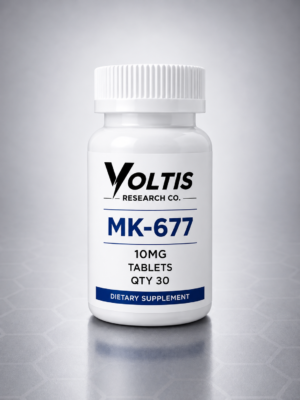
For Research Use Only
Methylene Blue (MB) is a synthetic phenothiazine-derived compound with distinctive oxidation-reduction (redox) properties.
It can reversibly cycle between oxidized methylene blue and reduced leucomethylene blue, allowing it to accept and donate electrons. This has made methylene blue particularly interesting in research involving mitochondrial electron transport, cellular respiration, oxidative stress, neurobiology, and metabolic signaling.
Methylene blue also has established medical applications; an FDA-approved pharmaceutical methylene blue product is indicated for acquired methemoglobinemia. A Voltis research product should therefore be clearly distinguished from an FDA-approved drug product.
Methylene blue is investigated in research involving:
One of methylene blue’s most interesting properties is its ability to participate in reversible electron transfer.
A simplified research model is:
Methylene Blue ⇄ Leucomethylene Blue
Through this redox cycling, experimental studies indicate methylene blue can participate in alternative mitochondrial electron transfer, accepting electrons from reducing equivalents such as NADH and transferring them farther along the respiratory pathway.
This creates an important research relationship:
Redox Cycling → Electron Transport → Cellular Respiration → Bioenergetics
Mitochondria normally generate ATP through an electron-transport system involving:
NADH → Complex I → CoQ → Complex III → Cytochrome c → Complex IV
Experimental research indicates methylene blue can function as an alternative electron carrier under certain conditions, which has generated considerable interest in models of impaired mitochondrial electron transport.
Researchers investigate potential effects on:
Importantly, these effects are concentration- and context-dependent. Methylene blue should not simply be described as universally “boosting mitochondria”; experimental work also demonstrates potentially detrimental mitochondrial effects under some conditions.
Because the brain has exceptionally high energy requirements, methylene blue has also attracted significant attention in neuroscience.
Experimental research has examined:
Some experimental studies have reported effects on mitochondrial respiration and memory-related processes, but this does not establish research-grade methylene blue as a treatment for cognitive impairment or neurodegenerative disease.
Methylene blue can also inhibit monoamine oxidase (MAO). This is scientifically important and creates a significant safety distinction.
MAO participates in the metabolism of neurotransmitters including serotonin and other monoamines. Laboratory studies have demonstrated substantial MAO inhibition by methylene blue.
This mechanism is one reason methylene blue cannot be treated like an ordinary nutritional supplement.
Methylene blue connects several fundamental areas of cellular biology:
Redox Chemistry ↔ Mitochondria ↔ Electron Transport ↔ Cellular Energy ↔ Neurobiology
Its ability to repeatedly undergo oxidation and reduction makes it a particularly interesting experimental tool for investigating:
✔ Premium Research Grade
✔ High-Purity Methylene Blue
✔ Redox-Active Research Compound
✔ Third-Party Tested (COA Available)
✔ Identity & Purity Verification
✔ Batch & Lot Traceability
✔ Secure Professional Packaging
✔ Laboratory Research Only
Researchers may investigate methylene blue in laboratory models involving mitochondrial bioenergetics, electron transport, redox biology, oxidative stress, cellular respiration, neurobiology, metabolic signaling, protein aggregation and cellular stress responses.
Store according to the product’s batch-specific stability documentation.
Protect material from excessive heat and inappropriate light exposure. Storage conditions should correspond to the specific formulation, concentration, container and analytical documentation supplied with the product.
This is an important section to keep on the Voltis page.
Methylene blue has clinically meaningful MAO-inhibiting activity. FDA-approved methylene blue carries a boxed warning concerning potentially serious or fatal serotonin syndrome when used with serotonergic drugs and certain opioids. FDA labeling also contraindicates its use in people with G6PD deficiency because of the risk of hemolytic anemia.
Therefore, it should not be marketed as a casual nootropic, energy supplement, “brain booster,” or mitochondrial supplement.
For Research Use Only.
Methylene blue has recognized pharmaceutical uses and FDA-approved drug formulations. A Voltis research-grade methylene blue product should not be represented as equivalent to an FDA-approved pharmaceutical methylene blue product.
Research into mitochondrial function, cognition, neuroprotection or cellular aging does not establish a research-grade product as a treatment for those conditions.
This product is intended exclusively for laboratory research and analytical purposes.
Not intended for human or veterinary use.
At Voltis Research Co., quality begins with verification. For compounds such as methylene blue, researchers need confidence in chemical identity, purity, concentration and batch consistency.
Qualifying batches undergo independent third-party analytical testing, with batch-specific Certificates of Analysis available to document identity and purity.
⚡ Research-Grade Quality
⚡ Independent Third-Party Testing
⚡ Batch-Specific Certificate of Analysis (COA)
⚡ High-Purity Research Compounds
⚡ Rigorous Quality Control
⚡ Secure Professional Packaging
⚡ Transparency, Consistency & Reliability
Powering Discovery Through Quality Research.
$75.00
Related Products

Voltis supplies peptides and research compounds intended for laboratory and research purposes only.
These products are not approved for human consumption and have not been evaluated by the FDA.
By entering this website, you acknowledge that you are at least 21 years of age and understand the intended use of these products.
Added to cart
Check out our shop to see what's available