Free shipping on orders over $100 ✦ Research-Grade Purity ✦ Rigorously Tested ✦ Science-Backed Formulas

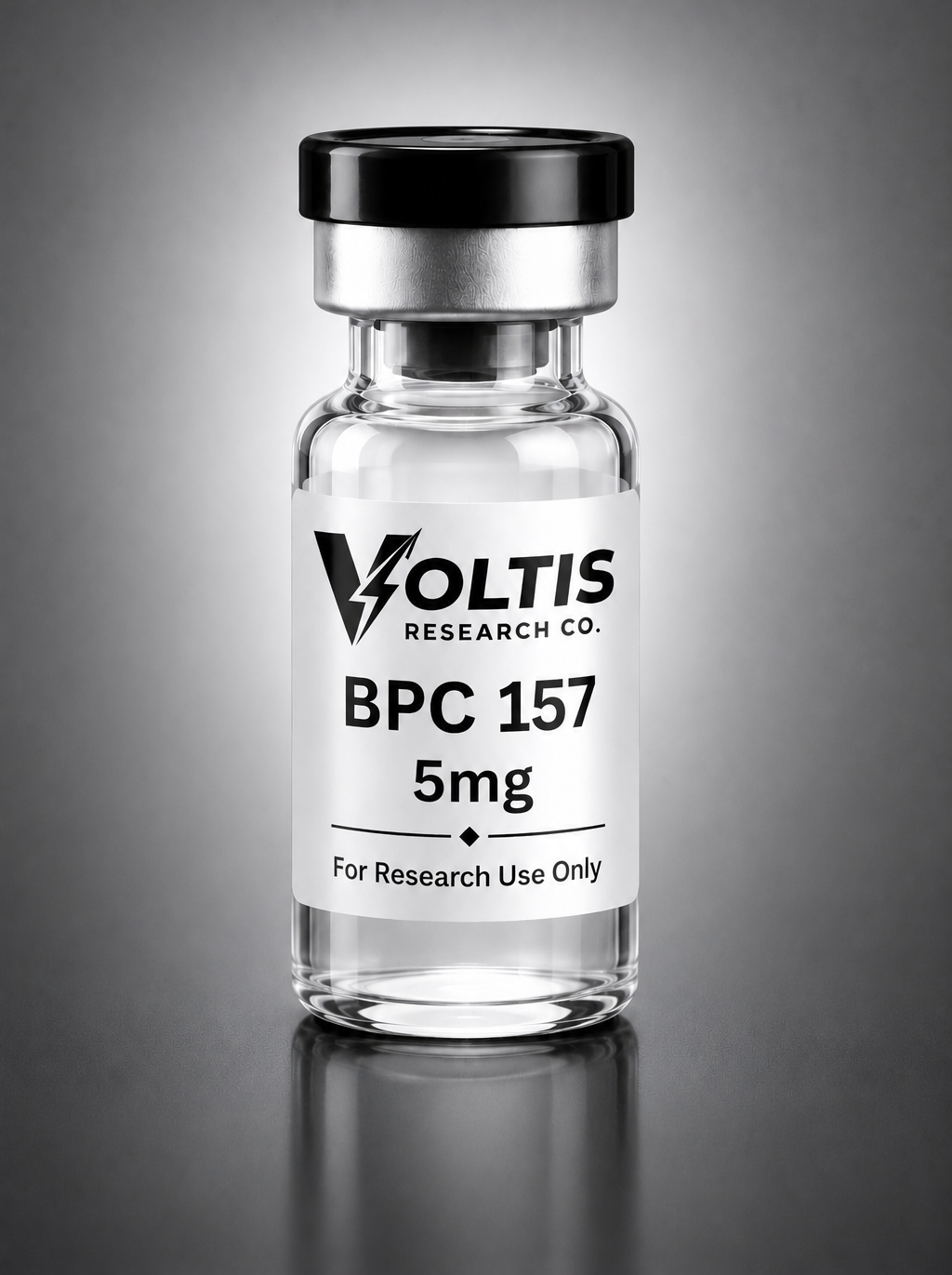
BPC 157 5mg

BPC-157

Stable Gastric Pentadecapeptide • Tissue Repair & Regenerative Biology Research

For Research Use Only

Overview

BPC-157 (Body Protection Compound-157) is a synthetic 15-amino-acid peptide derived from a sequence associated with a protective protein found in gastric juice.

BPC-157 has attracted considerable research interest because of experimental findings involving tissue repair, angiogenic signaling, tendon and muscle biology, gastrointestinal protection, vascular signaling, and cellular recovery following injury.

Most evidence supporting these effects comes from cellular and animal models, so these findings should not be represented as established therapeutic effects in humans.


Research Areas

BPC-157 has been investigated in research involving:

  • Tendon biology
  • Ligament and connective-tissue research
  • Skeletal-muscle repair
  • Wound-healing models
  • Gastrointestinal tissue biology
  • Fibroblast migration
  • Collagen organization
  • Angiogenic signaling
  • VEGF-associated pathways
  • Nitric-oxide signaling
  • Endothelial-cell biology
  • Oxidative-stress responses
  • Cellular migration
  • Tissue remodeling

Animal studies involving transected Achilles tendons reported changes in biomechanical recovery, collagen organization, fibroblast activity, and functional measures.


Mechanisms Being Studied

BPC-157 does not appear to operate through one simple, fully characterized receptor mechanism.

Instead, researchers have investigated several interconnected pathways involving:

BPC-157 → Cellular Signaling → Angiogenesis / Cell Migration / Matrix Remodeling

Experimental research has implicated:

  • VEGF-associated signaling
  • VEGFR2 pathways
  • Nitric oxide and eNOS signaling
  • FAK-paxillin signaling
  • Fibroblast migration
  • ERK1/2 pathways
  • Cellular proliferation
  • Collagen organization
  • Endothelial responses

In muscle and tendon injury models, BPC-157 has been associated with modulation of angiogenesis and increased VEGF expression during the healing process.


Tendon & Connective-Tissue Research

One of the most recognized areas of BPC-157 research involves tendon and connective tissue.

Researchers have investigated BPC-157 in models involving:

  • Achilles tendon transection
  • Tendon-to-bone attachment
  • Myotendinous junction injury
  • Fibroblast migration
  • Collagen formation and organization
  • Biomechanical tissue strength

In rat Achilles-tendon studies, BPC-157-treated groups demonstrated changes in functional recovery, biomechanical properties, fibroblast formation, and collagen organization compared with controls.

These remain preclinical findings and do not establish that BPC-157 repairs tendon injuries in humans.


Gastrointestinal Research

BPC-157 originated from research into gastric cytoprotection, and gastrointestinal biology remains an important part of its research history.

Experimental models have examined:

  • Gastric mucosal integrity
  • Gastrointestinal injury
  • Ulcer models
  • Intestinal tissue repair
  • Cytoprotective pathways
  • Gut vascular responses

This research helped generate interest in whether mechanisms originally observed in gastrointestinal tissue could also participate in repair processes elsewhere in the body.


Vascular & Angiogenic Research

Researchers have also investigated BPC-157’s relationship with blood-vessel signaling.

Experimental studies have implicated:

VEGF → VEGFR2 → AKT/eNOS → Nitric-Oxide Signaling

Research involving injured muscle and tendon models has reported modulation of angiogenesis during tissue recovery. More recent ex-vivo research using human internal mammary artery tissue has also investigated BPC-157’s interaction with endothelial nitric-oxide-dependent vascular responses, although this does not establish a clinical effect in humans.


Why Researchers Study BPC-157

BPC-157 is scientifically interesting because experimental research suggests activity across several processes important to tissue recovery:

  • Cell migration
  • Fibroblast activity
  • Angiogenic signaling
  • Collagen organization
  • Endothelial function
  • Nitric-oxide pathways
  • Gastrointestinal cytoprotection
  • Cellular stress responses

Rather than studying one isolated pathway, researchers use BPC-157 to investigate how vascular, cellular, and extracellular-matrix signaling may interact during tissue injury and repair.

The major unanswered question is translation: promising animal findings have not yet been validated through robust controlled human clinical trials.


Product Features

✔ Premium Research Grade
✔ High-Purity BPC-157
✔ 15-Amino-Acid Research Peptide
✔ Third-Party Tested (COA Available)
✔ Identity & Purity Verification
✔ Secure Professional Packaging
✔ Laboratory Research Only


Common Research Applications

Researchers may investigate BPC-157 in studies involving:

  • Tendon physiology
  • Ligament biology
  • Muscle-tissue research
  • Fibroblast migration
  • Collagen remodeling
  • Angiogenic signaling
  • Gastrointestinal tissue biology
  • Endothelial physiology
  • Nitric-oxide pathways
  • Wound-healing models
  • Tissue-remodeling pathways

Storage

Store according to the product’s batch-specific stability documentation.

Protect lyophilized material from excessive heat, moisture, and direct sunlight.

Following preparation for laboratory experiments, use validated laboratory storage procedures and minimize unnecessary temperature cycling or repeated freeze-thaw exposure.


Disclaimer

For Research Use Only.

BPC-157 is an investigational research peptide. Despite extensive preclinical research, its therapeutic safety and effectiveness in humans have not been established through adequate controlled clinical trials, and there is currently no approved BPC-157 pharmaceutical formulation or validated human dosing regimen.

This product is intended exclusively for laboratory research and analytical purposes.

Not intended for human or veterinary use.


Why Choose Voltis Research Co.

At Voltis Research Co., quality begins with verification. Researchers deserve confidence that the compound identified on every vial accurately represents the material being investigated.

Qualifying batches undergo independent third-party analytical testing, with batch-specific Certificates of Analysis available to document identity and purity.

The Voltis Commitment

⚡ Research-Grade Quality
⚡ Independent Third-Party Testing
⚡ Batch-Specific Certificate of Analysis (COA)
⚡ High-Purity Research Peptides
⚡ Rigorous Quality Control
⚡ Secure Professional Packaging
⚡ Transparency, Consistency & Reliability

Powering Discovery Through Quality Research.

BPC-157 (5 mg Vial) Dosage Protocol

$40.00

Category:
Voltis

I CERTIFY I AM AT LEAST 21 YEARS OF AGE

Sorry, your age does not permit you to enter at this time.

IMPORTANT DISCLAIMER

Voltis supplies peptides and research compounds intended for laboratory and research purposes only.
These products are not approved for human consumption and have not been evaluated by the FDA.
By entering this website, you acknowledge that you are at least 21 years of age and understand the intended use of these products.